
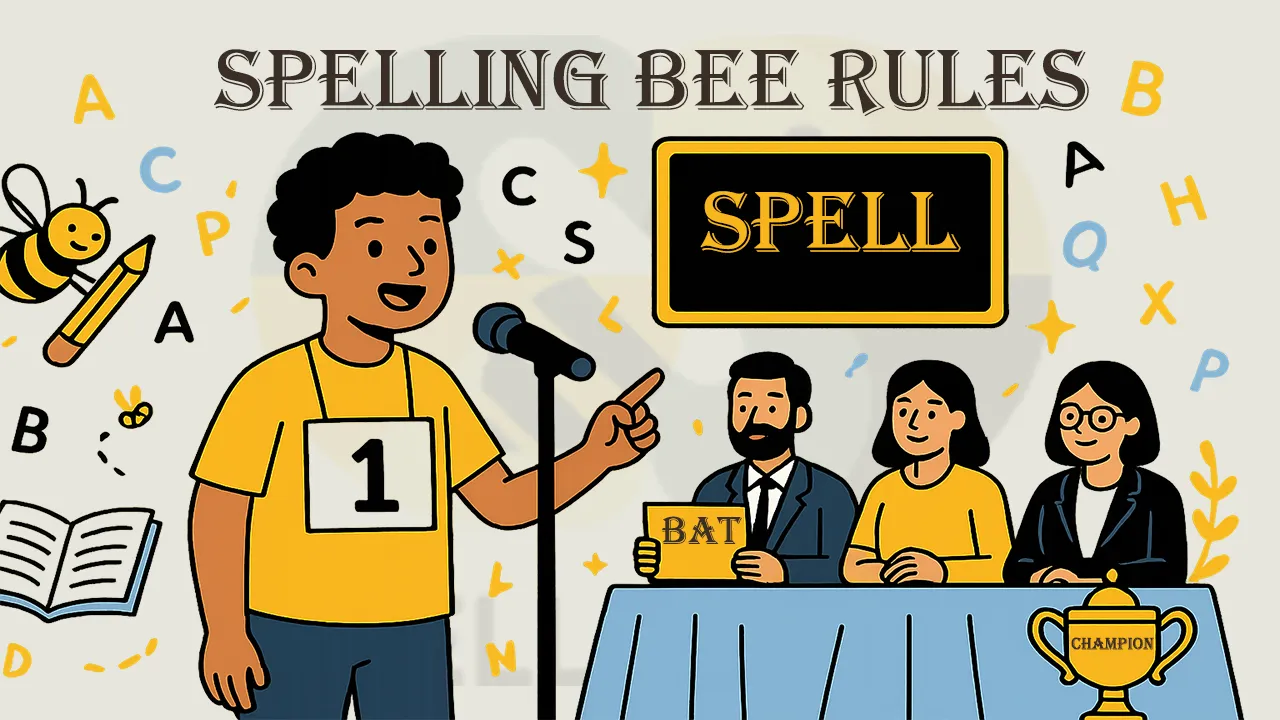
What Are Spelling Bee Rules?
Spelling Bee Rules are the official guidelines that explain how spelling competitions are organized and conducted. These rules provide a structured system that ensures fairness, consistency, and equal opportunities for all participants. They help judges manage contests smoothly and allow contestants to understand what is expected during each round.
Typically, spelling bee rules explain:
- ➥Who is eligible to compete in the competition
- ➥How words are presented by the pronouncer and evaluated by judges
- ➥How contestants must respond, including spelling aloud and time limits
- ➥Procedures for tie-breakers, spell-offs, appeals, or disputes
In simple terms, these rules maintain fairness while making the experience engaging and educational. They create a consistent structure whether participants join classroom contests, national events, or modern platforms that offer spelling bee free practice sessions and spelling bee unlimited challenges for learners.
Understanding these rules also helps players avoid common mistakes, manage time effectively, and respond confidently when spelling complex spelling bee words. For beginners especially, knowing how a competition works reduces anxiety and improves overall performance.
Official Spelling Bee Rules and Guidelines
The most widely recognized standards for spelling competitions come from the :contentReference[oaicite:0]{index=0}, which serves as the global benchmark for many school and regional contests. Educational institutions around the world often follow or adapt its structure to maintain consistency and credibility.
These official guidelines define eligibility, contest format, scoring systems, and tie-breaking procedures. Understanding them provides a clear picture of how professional competitions operate and how participants are evaluated at higher levels.
Eligibility Requirements
- ➥Contestants are typically students in Grade 8 or below.
- ➥Age restrictions apply, usually requiring participants to be under 15 years old by August 31 of the competition year.
- ➥Participants must represent a school or educational institution that has officially registered for the competition.
Eligibility rules ensure that competitions remain fair by grouping participants within similar academic levels. They also help schools organize preliminary rounds before advancing students to regional or national contests.
Contest Structure
- ➥Competitions progress through multiple rounds, including preliminaries, quarterfinals, semifinals, and final rounds.
- ➥During each round, a pronouncer announces the word while judges verify spelling accuracy.
- ➥If a word is misspelled, the contestant is usually eliminated unless every participant spells the word incorrectly, in which case the round may be repeated.
This structured process gradually increases difficulty, ensuring that only the most skilled spellers advance. The format also tests concentration, listening skills, and quick thinking under pressure — key abilities required to succeed in any competitive spell bee environment.
Vocabulary & Spell-Off Rounds
- ➥Many modern competitions include vocabulary rounds where contestants identify the correct meaning of a word.
- ➥If contestants tie, a spell-off round may be conducted where participants have 90 seconds to spell as many words correctly as possible.
Vocabulary testing reflects the evolving nature of spelling competitions. Instead of memorization alone, participants must understand word meanings, origins, and usage. Spell-off rounds add excitement and challenge, requiring rapid thinking and strong word recognition skills.
These official rules influence many modern learning platforms and digital tools that offer spelling bee games, practice tests, and interactive challenges to help students build skills progressively. By following standardized guidelines, both traditional competitions and online experiences provide meaningful learning opportunities for players of all levels.
Tie-Breakers and Appeals
Tie-breaking procedures are an essential part of official Spelling Bee Rules because they help determine a clear winner when contestants perform at the same level. These rules ensure fairness and transparency, especially during final rounds where competition becomes intense.
- ➥If two or more finalists miss the same word, the competition usually continues until one participant spells a word correctly while others make an error.
- ➥Parents, teachers, or school representatives may submit an appeal if they believe a word was mispronounced, incorrectly judged, or unfairly presented.
Appeals are reviewed carefully by judges or organizing committees to maintain fairness and credibility. This process protects contestants from possible errors and ensures that every spelling bee follows consistent standards. Understanding tie-breakers also helps participants stay calm under pressure, especially when competing in high-level contests or a competitive spelling bee game.
Common Rules Followed in School and Local Spelling Bees
While most schools and local competitions follow national guidelines for structure, they often introduce small adjustments based on available resources, participant numbers, or educational goals. These local adaptations still follow basic Spelling Bee Rules but may vary slightly in timing, judging methods, and contest procedures.
School-level competitions are especially helpful for beginners because they provide a supportive environment where students can build confidence, practice pronunciation, and improve spelling skills through structured spelling bee games and classroom activities.
Time Limits for Spellers
- ➥After hearing the word, contestants typically have 20–30 seconds to begin and complete their spelling.
- ➥Retracing is allowed, meaning contestants may restart spelling from the beginning, but they cannot change the sequence of letters already spoken.
Time limits encourage quick thinking and test a participant’s ability to process word structure efficiently. Practicing under timed conditions is essential for success in both classroom competitions and free spelling bee games available on learning platforms.
Role of Officials
A successful competition depends on several officials who ensure that the event runs smoothly and fairly. Each official has a specific responsibility that supports the integrity of the contest.
- ➥Pronouncer: Clearly announces the word, provides definitions, and repeats the word when requested.
- ➥Judges: Evaluate the contestant’s spelling and confirm whether it matches the official dictionary entry.
- ➥Coordinator: Organizes seating arrangements, manages rounds, and verifies eligibility requirements.
These roles work together to ensure consistency and fairness throughout the event. Understanding how officials operate helps participants follow proper procedures and interact confidently during the competition.
Speller Requests
To ensure accuracy, contestants are allowed to request additional information about a word before spelling it. This helps clarify pronunciation and meaning, especially for unfamiliar or complex terms.
Contestants may request:
- ➥Definition of the word
- ➥Part of speech
- ➥Language of origin
- ➥Use of the word in a sentence
- ➥Alternate pronunciations if available
Requesting this information is a smart strategy that improves accuracy and reduces mistakes. Many experienced participants use these options regularly to better understand word structure and pronunciation patterns.
Word Variations
Language can be complex, and spelling competitions must address different word forms and variations. To prevent confusion, specific rules guide how these variations are handled.
- ➥Homonyms: Words that sound the same but have different meanings are clarified through definitions.
- ➥Capitalization and punctuation: Usually ignored unless specifically required by the pronouncer.
- ➥Alternate spellings: Accepted only if recognized in the official reference dictionary.
These guidelines ensure consistency across competitions and help avoid misunderstandings. Mastering such details improves performance and helps contestants succeed when they play spelling bee competitions in school or online environments.
How Spelling Bee Games Adapt the Rules for Players
Modern digital platforms have transformed traditional competitions into interactive learning experiences. Online platforms and apps modify standard Spelling Bee Rules to make practice more engaging, accessible, and flexible for players of all skill levels.
Unlike traditional elimination-based contests, many digital platforms provide continuous learning opportunities, allowing users to practice vocabulary, track progress, and improve performance through a spelling bee unlimited format. These platforms also provide a spelling bee free environment where learners can practice without restrictions.
Scoring Systems and Ranks
- ➥Players earn points for correct answers instead of being eliminated.
- ➥Progress levels such as Beginner, Skilled, and Champion reward consistent performance.
Ranking systems motivate learners by providing measurable progress indicators. Many platforms also track spelling bee ranks, helping users compare performance and identify areas for improvement.
Pangrams and Word List Challenges
- ➥A spelling bee pangram requires using every provided letter at least once, making it one of the most challenging tasks.
- ➥Curated word lists support both vocabulary development and enjoyable gameplay.
These challenges encourage creative thinking and deeper word exploration. Many players use practice tools such as a spelling bee helper or learning resources to understand complex patterns and improve their performance.
Solo vs. Multiplayer
- ➥Solo mode allows learners to build vocabulary independently at their own pace.
- ➥Multiplayer modes recreate the excitement and competitive atmosphere of live events.
Multiplayer competitions simulate real contest pressure, helping players improve speed, accuracy, and confidence. These features make digital platforms an effective way to practice and prepare for competitive events or simply enjoy a spelling bee game online.
Rule Variations Across Schools and Competitions
Although most competitions follow standardized formats, regional and international events often introduce unique variations based on educational systems, cultural differences, or language requirements. These variations add diversity to the spelling bee experience while maintaining the core objective of promoting language learning.
- ➥Brookline Schools (USA): Typically enforce a 20-second time limit and require contestants to face judges while spelling.
- ➥Roseburg District: Words are pronounced strictly according to diacritical markings to ensure precise pronunciation.
- ➥Regional Competitions: May use customized tie-breaking systems or replay rounds to determine winners.
- ➥International Competitions: Often adapt rules to support different languages, writing systems, or cultural contexts.
Geo-tip: If you are preparing for a competition outside the United States, always review your local or national guidelines carefully. Understanding regional differences helps contestants avoid confusion and perform confidently in any free spelling bee competition or academic event.
Learning about these variations also prepares participants for global competitions and broadens their understanding of language diversity. Whether competing locally or internationally, mastering the rules ensures fairness, confidence, and better performance.
How to Prepare and Win While Following the Rules
Consistent practice using a structured spelling bee practice routine helps contestants perform confidently under real competition pressure. Winning a spelling bee is not just about memorizing difficult words — it also requires understanding competition procedures, managing time wisely, and applying effective learning strategies.
By combining preparation with a clear understanding of Spelling Bee Rules, participants can reduce mistakes, improve accuracy, and respond confidently during challenging rounds. Whether you participate in school competitions or practice through a spelling bee game, the following strategies can help you succeed.
Practice With Word Lists and Flashcards
Begin your preparation using official word lists provided by your school or competition organizers. Studying curated lists helps you become familiar with common spelling patterns and frequently tested vocabulary. Flashcards are especially useful for reviewing definitions, pronunciation, and usage of difficult terms.
Many learners also review previous spelling bee answers or daily challenges to understand commonly repeated words and patterns. Regular exposure to new vocabulary strengthens memory and builds confidence for competition rounds.
Learn Roots and Origins
Understanding word origins can significantly improve spelling accuracy. Many English words come from Greek, Latin, French, or Germanic languages, and recognizing these roots helps explain spelling patterns. For example, Greek words often include “ph” sounds, while Latin words may follow consistent suffix patterns.
Studying word origins also helps participants decode unfamiliar words logically instead of guessing. This approach is widely recommended in both classroom competitions and digital spelling bee online learning environments.
Train for Timed Rounds
Time management is an essential skill in any competition. Set a 30-second timer while practicing to simulate the time limits used by pronouncers during official rounds. This exercise helps improve focus, listening skills, and quick decision-making.
Many learners also use practice tools that provide spelling bee hints or interactive challenges to improve speed and accuracy. Training under time pressure prepares contestants for real competition conditions and helps them stay calm while spelling complex words.
Mock Spell-Offs
Practicing rapid-fire spelling sessions prepares contestants for tie-break situations. Try spelling as many words as possible within 90 seconds, just like official spell-off rounds. This method strengthens recall ability and builds confidence in high-pressure situations.
To improve gradually, begin your preparation with official spelling bee words by grade that match your current skill level. As your skills improve, increase the difficulty and explore advanced vocabulary challenges.
Some participants also use a spelling bee solver or digital learning tools to analyze word patterns and identify areas that need improvement. Practicing regularly through spelling bee today challenges or daily quizzes can significantly boost performance and vocabulary retention.
Final Thoughts: Why Knowing the Rules Matters
Whether you are a student preparing for school competitions, a teacher guiding learners, or a word enthusiast practicing on spellbee.us, understanding Spelling Bee Rules provides a strong foundation for success. Clear knowledge of rules ensures fairness, improves confidence, and helps participants perform their best in any competition environment.
Spelling competitions are designed not only to test vocabulary but also to develop discipline, focus, and language skills. By learning the rules and practicing consistently through spelling bee free learning resources or structured challenges, participants gain valuable communication and problem-solving abilities.
Although the rules may seem strict at first, they exist to create equal opportunities for all contestants. Once you understand how competitions work and follow the proper procedures, you can compete with confidence and improve your overall performance.
With dedication, practice, and a clear understanding of the rules, you can enjoy the learning journey, track your progress, and move closer to becoming a true Spelling Bee Champion. Whether you practice using digital tools, participate in school events, or explore popular challenges like the spelling bee NYT, mastering the rules will always give you a competitive advantage.